

Anthropic is making a bigger move into the legal tech market with new AI tools designed for law firms and legal teams. The company announced new features for Claude for Legal, its law-focused AI product, as demand for legal AI tools continues to grow across the industry.
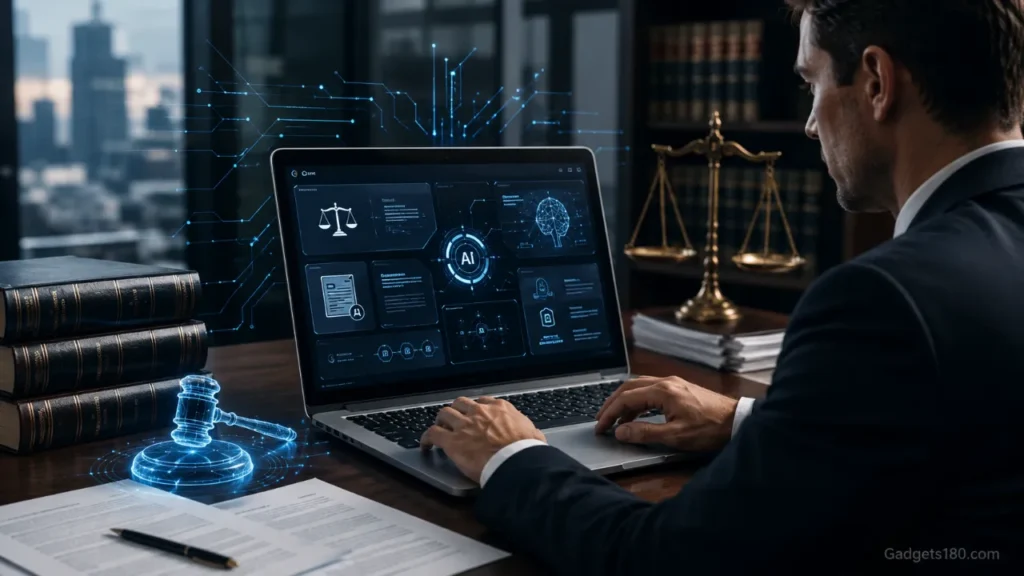
The new update gives Claude more legal-focused plug-ins and connectors that can help with everyday law firm tasks like document review, legal research, deposition preparation, drafting, and searching through case-related files.
This move shows how quickly artificial intelligence is becoming part of the legal industry. Law firms are under pressure to work faster, reduce repetitive tasks, and manage huge amounts of documents more efficiently. AI tools like Claude are now being positioned as assistants that can support lawyers with research and workflow automation.
What Anthropic Announced
Anthropic’s new legal AI features are designed to expand Claude for Legal, which was first introduced earlier this year. The new tools include legal plug-ins and MCP connectors, which allow Claude to connect with specific data sources and software systems used by legal professionals.
These tools are built for different areas of law, including:
- Commercial law
- Privacy law
- Corporate law
- Employment law
- Product-related legal work
- AI governance
The goal is to make Claude more useful for law firms that need AI help with structured, document-heavy, and research-based work.
How Claude Can Help Legal Teams
Claude’s new legal tools are focused on clerical and knowledge-work tasks. These are the kinds of jobs that often take a lot of time but do not always require lawyers to start from scratch manually.
For example, Claude can help with:
- Searching legal documents
- Reviewing case materials
- Preparing for depositions
- Drafting legal documents
- Finding case law resources
- Managing information across legal files
This does not mean AI is replacing lawyers. Instead, the idea is that AI can help lawyers and legal teams work faster by handling parts of the research and document process.
What Are MCP Connectors?
MCP stands for Model Context Protocol. In simple terms, MCP connectors allow AI models to connect with outside tools, data sources, and software platforms.
For law firms, this is important because legal work often depends on information stored across different platforms. Claude’s new connectors can integrate with tools that legal teams already use, including document management and file search platforms such as Docusign and Box. Legal research platforms like Thomson Reuters’ Westlaw can also be connected.
This makes Claude more useful because it can work with real legal documents and systems instead of only answering general questions.
Legal AI Is Becoming a Big Market
Anthropic’s move comes at a time when the legal AI market is getting more competitive. Startups such as Harvey and Legora are already gaining attention for using AI to automate legal workflows. Harvey raised $200 million in March at an $11 billion valuation, while Legora raised a $600 million Series D and launched a major ad campaign featuring actor Jude Law.
These numbers show that investors believe legal AI could become a major business category. Legal work is expensive, complex, and document-heavy, which makes it a strong target for AI automation.
Why Law Firms Are Interested in AI
Law firms deal with massive amounts of information. Contracts, case files, court documents, legal research, client records, and compliance materials can take hours or days to review.
AI tools can help by quickly summarizing documents, identifying important details, searching through large files, and helping lawyers prepare drafts. This can save time and allow legal professionals to focus more on strategy, judgment, and client work.
For in-house legal teams, AI can also help reduce workload and speed up routine legal tasks.
But Legal AI Still Has Risks
Even though AI can be useful, the legal industry has to be careful. AI tools can make mistakes, especially when they generate false information or fake legal citations. These mistakes are often called AI hallucinations.
There have already been cases where lawyers used AI-generated legal documents that included errors or fake quotes. In one case, California issued a fine against an attorney who used ChatGPT to draft an appeal that included fake quotations.
This is why AI-generated legal work must be reviewed by trained legal professionals. In legal matters, even small mistakes can create serious problems.
Also read;
Android and iPhone Texts Can Finally Get End-to-End Encryption
Bravo Brings Unscripted Microdramas to Peacock as Short-Form Streaming Gets Bigger
Affordable eos Body Care Products That Feel Like Luxury Without the High Price
AI Glossary Explained: Simple Meanings of Common Artificial Intelligence Terms
AI May Support Lawyers, Not Replace Them
The most realistic use of legal AI is as a support tool. AI can help with research, organization, first drafts, and document review, but lawyers still need to check the work.
Legal decisions require human judgment, ethics, context, and responsibility. AI can process information quickly, but it does not fully understand the legal consequences of its own output.
That is why law firms using AI must create strong review systems before relying on it in real cases.
Why Anthropic’s Entry Matters
Anthropic is already known for Claude, one of the major AI chatbot platforms. By expanding deeper into legal services, Anthropic is trying to compete in a high-value professional market.
Legal AI could become one of the most important uses of generative AI because law firms are willing to pay for tools that improve productivity and reduce time spent on repetitive work.
If Claude for Legal becomes widely adopted, Anthropic could become a stronger player in enterprise AI, especially among law firms, corporate legal departments, and compliance teams.
Conclusion
Anthropic’s new Claude for Legal features show how fast the AI legal services industry is growing. With new plug-ins, MCP connectors, and integrations for legal workflows, Claude is being positioned as a serious tool for law firms and in-house legal teams.
At the same time, the legal industry must be careful. AI can speed up research and document work, but it can also make serious mistakes if not properly reviewed.
The future of legal AI will likely depend on balance: using AI to save time while keeping human lawyers responsible for accuracy, ethics, and final decisions.
What is Claude for Legal?
Claude for Legal is Anthropic’s law-focused AI product designed to help legal professionals with research, document review, drafting, deposition preparation, and other legal workflows.
What new features did Anthropic announce for Claude for Legal?
Anthropic announced new legal plug-ins and MCP connectors that allow Claude to work with legal tools, data sources, and software systems used by law firms.
What can Claude do for law firms?
Claude can help law firms search documents, review case materials, prepare for depositions, draft documents, and find legal research resources.
What are MCP connectors?
MCP connectors allow AI models like Claude to connect with external software, data platforms, and document systems. This helps the AI work with information stored in tools that legal teams already use.
Which legal areas can Claude’s new tools support?
Claude’s legal tools are designed for areas such as commercial law, privacy law, corporate law, employment law, product legal work, and AI governance.
Why is the legal AI market growing?
The legal AI market is growing because law firms handle large amounts of documents and research. AI can help reduce repetitive work, speed up reviews, and improve productivity.
Who are Anthropic’s competitors in legal AI?
Anthropic is competing with legal AI startups such as Harvey and Legora, both of which are building AI tools for legal workflows.
Can AI replace lawyers?
AI is more likely to support lawyers than replace them. It can help with research, drafting, and document review, but legal professionals still need to check accuracy and make final decisions.
What are the risks of using AI in legal work?
The biggest risks include fake citations, incorrect legal information, hallucinated details, and overreliance on AI-generated documents without proper human review.
Is legal AI safe to use?
Legal AI can be useful when used carefully, but lawyers and legal teams must review its output before using it in real cases or official documents.
1 thought on “Anthropic Pushes Claude Deeper Into Legal AI as Competition Heats Up”