
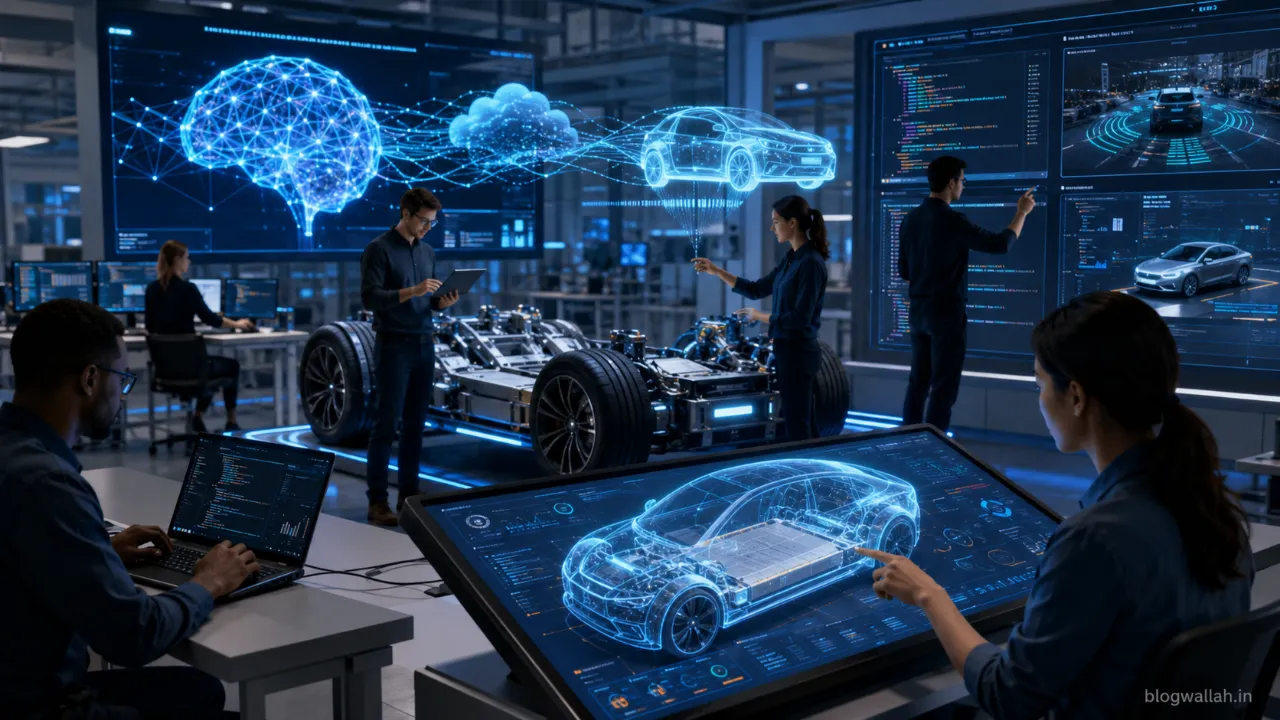
AI Skills Race: The auto industry is entering a new phase where AI skills are becoming just as important as traditional automotive engineering. Car companies are no longer only competing on engines, batteries, software, or self-driving systems. They are also competing for workers who understand artificial intelligence, data systems, cloud engineering, automation, and AI-powered workflows.
This shift is already changing hiring and layoffs across the automotive world. Some companies are cutting older roles while trying to hire people with stronger AI-focused backgrounds. The result is a new kind of skills race in the auto industry.
AI Is Changing Automotive Jobs
AI is creating opportunities for some workers, but it is also putting pressure on others. Automakers are trying to become more software-driven, and that means they need employees who can build, manage, and improve AI systems.
General Motors is one example. The company laid off more than 10% of its IT department, affecting around 600 salaried employees, as part of what was described as a skills swap. GM said it is still hiring, but the company is looking for workers with more AI-focused experience.
This shows how the industry is changing. Automakers are not only looking for people who can use AI tools. They want people who can build AI systems from the ground up.
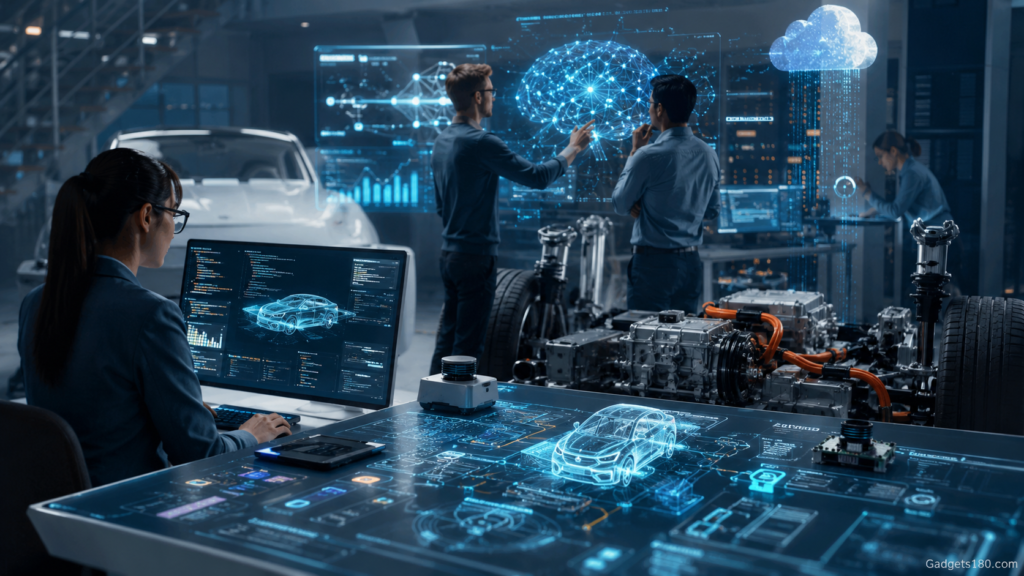
What Skills Automakers Want Now
The most in-demand skills in the auto industry are becoming more technical and AI-focused.
Companies are looking for people with experience in:
- AI-native development
- Data engineering
- Data analytics
- Cloud-based engineering
- AI agent development
- Model development
- Prompt engineering
- AI workflow design
In simple terms, automakers want workers who understand how AI systems are built, trained, connected, and used in real products.
This is different from basic AI usage. Knowing how to write a prompt is useful, but companies increasingly want people who can design AI pipelines, train models, manage data, and build intelligent systems into vehicles and business operations.
Job Cuts Are Growing Across Auto Companies
The AI shift is happening at the same time major U.S. automakers are cutting salaried jobs.
According to the report, Ford, GM, and Stellantis have cut more than 20,000 U.S. salaried jobs combined from their recent employment peaks this decade. That represents about 19% of their combined salaried workforce.
Not all of these cuts are caused only by AI. Automakers are also dealing with EV investment costs, software transformation, market pressure, and changing business priorities. But AI and automation are clearly part of the larger technology shift affecting jobs.
AI Is Not Just About Self-Driving Cars
When people think about AI in automotive, they often think about self-driving cars. But AI is now being used in many other parts of the transportation industry.
AI can help with:
- Vehicle software
- Manufacturing
- Driver safety
- Fleet monitoring
- Predictive maintenance
- Road condition detection
- Insurance and liability claims
- Supply chain operations
- Customer service
- Data analysis
This means AI is not only changing future vehicles. It is also changing how transportation companies operate behind the scenes.
Also read;
Hotel Check-In System Exposed Over 1 Million Passports and Driver’s Licenses Online
X Launches New History Tab 2026 for Bookmarks, Likes, Videos, and Articles
Anthropic Pushes Claude Deeper Into Legal AI as Competition Heats Up
Android and iPhone Texts Can Finally Get End-to-End Encryption
Samsara Shows a Real AI Use Case
One company mentioned in the report is Samsara, which has found a practical way to use AI in transportation.
Samsara has spent years providing cameras for trucks. These cameras are used for driver monitoring, theft prevention, and liability support. Over time, the company collected a large amount of road and fleet data.
Now, Samsara has used that data to train a model that can detect potholes and understand how quickly they are getting worse. The company is selling this product to cities, and Chicago is one of the cities under contract.
This is a good example of AI being used in a real-world transportation problem. Instead of only making cars smarter, AI can help cities maintain roads more efficiently.
Why Data Is Becoming So Valuable
The Samsara example shows why data has become one of the most valuable assets in transportation.
Vehicles, trucks, cameras, sensors, and fleet systems create huge amounts of information every day. Companies that can organize and use this data properly can build AI tools for safety, maintenance, logistics, and city planning.
This is why automotive companies are hiring more people with data and AI backgrounds. The future of transportation depends not only on hardware, but also on how well companies can use data.
Automotive Companies Are Still Figuring AI Out
Even though many companies are rushing into AI, not all of them have a clear strategy yet.
Some businesses know they need AI but are still trying to understand where it actually creates value. Others are cutting teams and hiring new AI talent without fully knowing how their internal workflows should change.
This is why the current moment feels like an arms race. Every major company wants to appear ready for AI, but the winners will likely be the ones that use AI in practical, revenue-generating ways.
Rivian, Mind Robotics, and the Funding Story
The article also highlights investor interest around RJ Scaringe, the founder of Rivian and related companies.
Rivian’s spinoff company Mind Robotics reportedly raised another $400 million, just two months after raising $500 million. TechCrunch calculated that investors have put around $12.3 billion into Scaringe’s three startups: Rivian, Also, and Mind Robotics. That figure does not include Rivian’s IPO proceeds or strategic deals with Volkswagen Group and Uber.
This shows that investors are still willing to put major money behind transportation, robotics, and mobility startups when they believe in the leadership and long-term opportunity.
Other Mobility Deals Getting Attention
The mobility sector is also seeing activity in drones, charging infrastructure, ride-hailing, and autonomous fleet support.
The report mentioned several deals, including:
- Arkeus, an Australian startup building perception software for autonomous drones and aircraft, raised $18 million.
- Aseon Labs, a California startup building a “depot in a box” for charging, cleaning, and inspecting autonomous fleets, came out of stealth with Y Combinator backing.
- Rapido, an Indian ride-hailing company, raised $240 million in a round led by Prosus, valuing the company at $3 billion.
- Quantum Systems, a Germany-based drone startup, is reportedly in talks to raise around €600 million, or about $703 million.
These deals show that mobility investment is not limited to cars. Investors are also looking at drones, charging systems, fleet infrastructure, and transportation platforms.
Autonomous Vehicle Updates Are Still Important
The article also mentioned several important autonomous vehicle updates.
Tesla’s Robotaxi program has reported at least two crashes since July 2025 while remote teleoperators were driving the vehicles. Waymo also issued a software update for nearly 4,000 vehicles to help them avoid flooded roads as part of a recall announced by the National Highway Traffic Safety Administration.
These updates show that autonomous vehicle technology is still improving, but companies continue to face real-world safety challenges.
What This Means for Workers
For workers in the auto industry, the message is clear: AI skills are becoming more important.
People working in IT, software, engineering, operations, data, manufacturing, or fleet systems may need to upgrade their skills to stay competitive.
Useful areas to learn include:
- Python
- Data analytics
- Cloud platforms
- Machine learning basics
- AI model workflows
- Automation tools
- Prompt engineering
- Software integration
- Computer vision basics
The future auto workforce will likely include more hybrid roles where people understand both vehicles and AI systems.
What This Means for Automakers
For automakers, the challenge is not just hiring AI talent. The bigger challenge is knowing how to use that talent effectively.
Companies need to decide where AI can actually improve products, reduce costs, increase safety, and create new revenue. Simply adding AI to job descriptions or replacing workers without a clear strategy may not be enough.
The companies that win will likely be the ones that combine automotive knowledge with strong AI execution.
Conclusion
The automotive industry is moving into an AI skills race. Automakers, mobility startups, fleet companies, and transportation platforms are all trying to figure out how artificial intelligence fits into their future.
This shift is creating new jobs for people with AI, data, cloud, and automation skills. At the same time, it is putting pressure on traditional roles that may no longer match where the industry is heading.
AI will not only shape self-driving cars. It will also influence manufacturing, fleet management, road safety, city infrastructure, hiring, and business operations. For the auto industry, the next major competition may not only be about who builds the best vehicle — it may be about who builds the smartest AI-powered transportation ecosystem.
What is the AI skills race in the automotive industry?
The AI skills race means automakers and mobility companies are competing to hire workers who understand artificial intelligence, data engineering, cloud systems, automation, and AI workflows.
Why are automakers cutting jobs while hiring AI workers?
Automakers are shifting their workforce toward newer technology needs. Some older roles are being reduced while companies hire people with stronger AI, software, data, and cloud engineering skills.
What AI skills are most important for automotive jobs?
Important skills include AI-native development, data engineering, analytics, cloud engineering, model development, AI agent development, prompt engineering, and AI workflow design.
Is AI only used for self-driving cars?
No. AI is also used for fleet monitoring, manufacturing, road condition detection, predictive maintenance, driver safety, supply chains, and customer service.
How is Samsara using AI in transportation?
Samsara is using data from truck cameras to train AI models that can detect potholes and track how quickly they are getting worse.
Why is data important in automotive AI?
Data helps companies train AI systems, improve vehicle software, monitor fleets, detect road problems, and make transportation systems more efficient.
Are AI-related layoffs happening in the auto industry?
Yes, major automakers have cut thousands of salaried jobs in recent years. While there are several reasons, AI and broader technology changes are part of the shift.
What does this mean for auto industry workers?
Workers may need to learn AI, data, software, and cloud skills to stay competitive as the industry becomes more technology-driven.
Will AI replace automotive workers?
AI may replace some tasks and roles, but it will also create new jobs for people who can build, manage, and improve AI-powered systems.
What is the biggest challenge for automakers using AI?
The biggest challenge is using AI in practical ways that improve safety, reduce costs, create revenue, and support real transportation needs.
6 thoughts on “AI Skills Race Is Coming for the Auto Industry as Car Companies Rethink Jobs”