
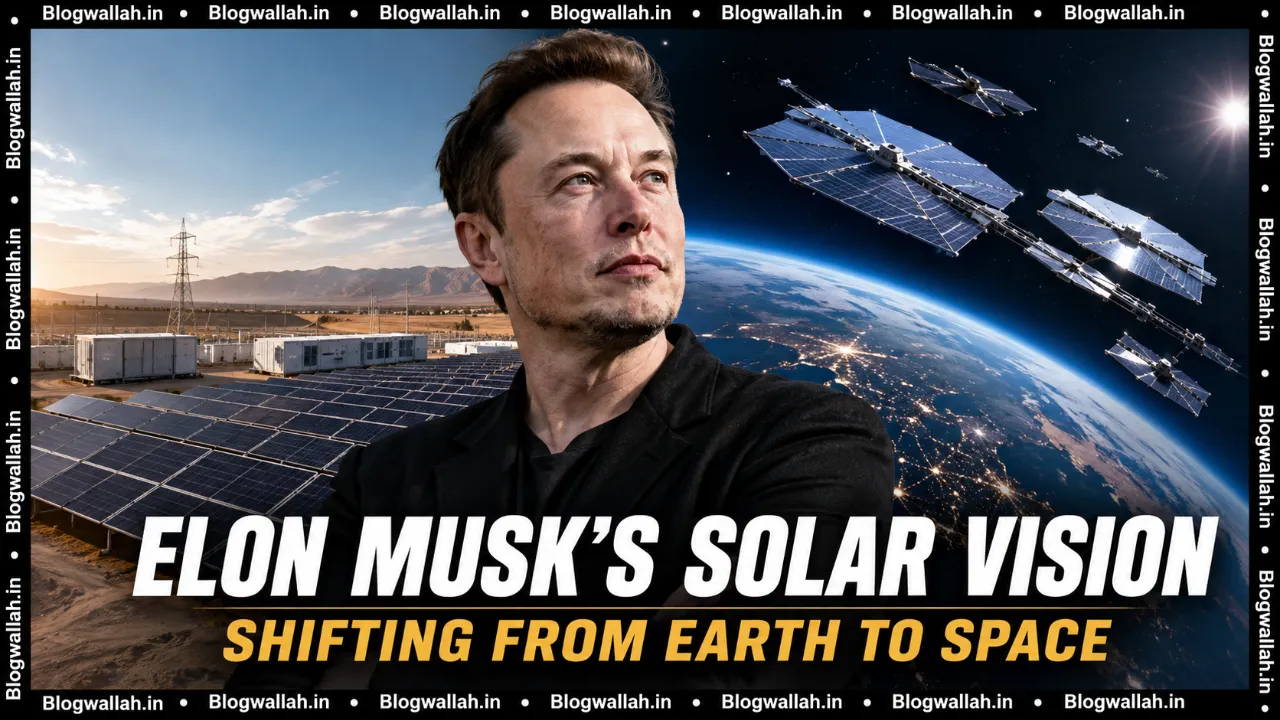
Elon Musk once helped sell one of the boldest clean-energy ideas in tech: a future where electric cars, home batteries, and rooftop solar would work together to move the world away from fossil fuels. That vision was central to Tesla’s early identity.
Now, the story looks different.
A new TechCrunch report says Musk’s current energy focus appears to be moving away from solar power on Earth and toward a much more futuristic idea: space-based solar power for AI data centers. At the same time, his AI company xAI is reportedly relying heavily on natural gas to power data centers here on Earth.
What Changed in Musk’s Energy Strategy?
The shift is not that solar power has disappeared from Musk’s world completely. Instead, the focus seems to have moved from terrestrial solar to space-based solar.
According to the report, solar power appears in SpaceX’s filing mostly as part of a future space infrastructure plan, not as a major solution for powering xAI’s Earth-based data centers. SpaceX argues that solar arrays in orbit could generate much more energy than solar panels on Earth because they can receive sunlight almost continuously.
That is a major change from the old Tesla clean-energy pitch, which focused on rooftop solar, batteries, electric vehicles, and a sustainable energy economy on Earth.
Why AI Data Centers Need So Much Power
The biggest reason behind this energy debate is AI.
Modern AI companies need enormous amounts of electricity to train and run large models. Data centers require power for servers, cooling systems, networking equipment, and backup infrastructure.
As AI demand grows, companies are racing to secure reliable energy. Some are looking at nuclear power, some are buying renewable energy contracts, and some are using natural gas because it can deliver large amounts of power quickly.
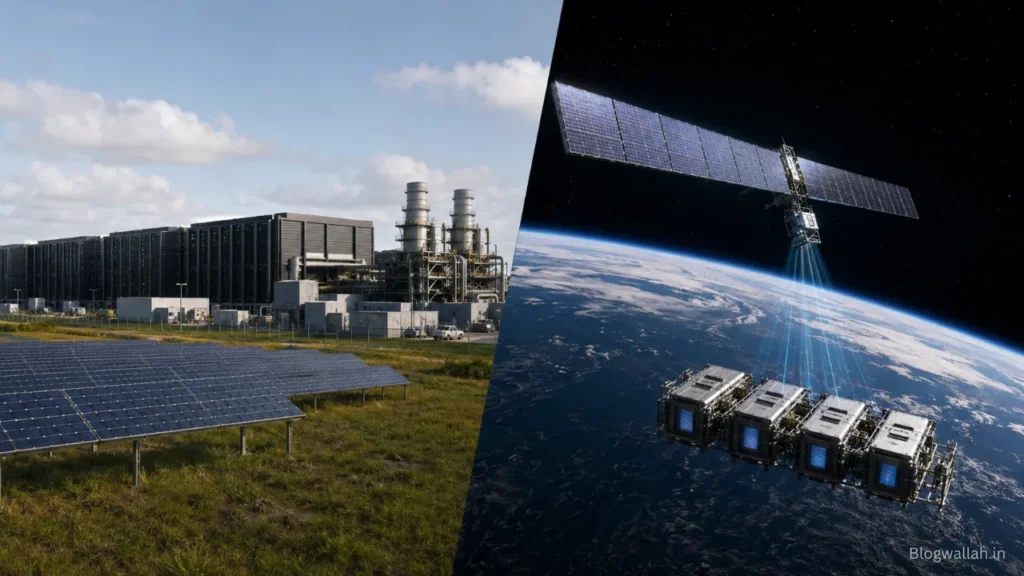
That is where the contradiction appears. Tesla still sells solar and batteries, but xAI’s near-term data center strategy reportedly depends heavily on natural gas rather than large-scale Earth-based solar.
Space-Based Solar Power: What Is It?
Space-based solar power is the idea of collecting sunlight in orbit and using that energy to power computing systems or send electricity elsewhere.
The idea sounds futuristic, but it has been discussed for decades. In space, solar panels can avoid clouds, nighttime, seasons, and weather. That means orbital solar systems can potentially generate power more consistently than solar panels on Earth.
SpaceX’s argument is that space-based solar arrays could produce more than five times the energy of Earth-based solar because they can operate with near-constant sunlight.
Why Musk Wants Data Centers in Space
Musk and other tech leaders are increasingly interested in the idea of putting data centers in orbit. The logic is simple: AI needs more power, and space has constant sunlight.
Space-based data centers could theoretically run on solar energy without putting more pressure on Earth’s electrical grid. Reuters reported earlier this year that Musk’s SpaceX-xAI strategy involved a long-term plan for solar-powered orbital data centers, though major technical challenges remain.
These challenges include radiation, heat management, latency, launch costs, maintenance, and the risk of space debris.
Why Earth-Based Solar Is Still Important
Even if space-based solar becomes real one day, it does not solve today’s energy problem.
Solar power on Earth is already growing fast and is expected to become one of the dominant energy sources in the coming decade. But AI data centers are also increasing demand for fossil fuels because companies need reliable power immediately. TechCrunch separately reported that solar may dominate energy by 2035, while data centers could still keep fossil fuels in business.
That creates a difficult reality: the clean-energy future is growing, but AI’s power demand is growing too.
The Tesla Contradiction
The biggest reason this story is getting attention is the contrast between Tesla’s clean-energy mission and xAI’s reported energy choices.
Tesla’s broader identity has long been tied to moving the world toward sustainable energy. Solar panels, Powerwall batteries, electric vehicles, and grid storage all fit that mission.
But if Musk’s AI company is relying on natural gas for data centers while SpaceX talks about solar power in space, critics may see it as a shift away from the practical solar-electric economy Musk once promoted.
In simple terms, Musk may still believe in solar — but increasingly, his biggest solar dream appears to be in orbit, not on rooftops or land-based solar farms.
Also read;
You Don’t Have to Click Anything to Get Hacked Anymore – These Phone Settings Can Help
AI Skills Race Is Coming for the Auto Industry as Car Companies Rethink Jobs
AI Glossary Explained: Simple Meanings of Common Artificial Intelligence Terms
Elon Musk vs Sam Altman Trial: Shivon Zilis’ Testimony Becomes a Major Talking Point
Why This Matters for the AI Industry
This is bigger than Musk.
AI companies are facing a power crisis. Training advanced AI models requires huge energy resources, and the industry is still trying to figure out how to scale without overwhelming electric grids or increasing emissions.
If major AI companies rely on fossil fuels in the short term while promising cleaner solutions in the future, they may face criticism from regulators, environmental groups, and local communities.
The question is not only whether AI can become more powerful. It is whether AI growth can be powered responsibly.
Could Space-Based Solar Actually Work?
Space-based solar is possible in theory, but building it at massive scale is extremely difficult.
Experts have raised concerns about the cost of launching large solar systems, maintaining equipment in orbit, managing heat, protecting hardware from radiation, and avoiding orbital debris. AP reported earlier this year that experts were skeptical of Musk’s plan because space data centers would face major engineering and environmental challenges.
That does not mean the idea is impossible. But it does mean it may take years, or even decades, before space-based solar can become a practical replacement for power plants on Earth.
Conclusion
Elon Musk’s energy vision appears to be changing. The old Tesla dream focused on solar panels, batteries, and electric vehicles creating a cleaner energy system on Earth. The new SpaceX-xAI vision looks much more focused on orbital data centers powered by space-based solar.
That future may sound exciting, but it does not solve the immediate energy demand from AI data centers. For now, the tension remains: Musk’s companies still talk about solar power, but xAI’s near-term AI infrastructure appears tied to natural gas.
The bigger question is whether the future of AI will be powered by clean energy on Earth, solar power in space, or fossil fuels for much longer than tech companies want to admit.
FAQ
Has Elon Musk given up on solar power?
Not completely. The focus appears to be shifting from Earth-based solar to space-based solar power, especially for future AI data centers.
What is space-based solar power?
Space-based solar power means collecting sunlight in orbit, where solar panels can receive near-constant sunlight without clouds or nighttime interruptions.
Why does Musk want solar power in space?
The idea is that space-based solar could provide constant energy for orbital data centers and reduce pressure on Earth’s power grids.
What does xAI use for data center power?
According to reports, xAI is relying heavily on natural gas for some Earth-based data center power needs.
Why do AI data centers need so much electricity?
AI data centers use huge amounts of power for servers, chips, cooling systems, and model training or inference.
Is space-based solar practical today?
Not at large scale yet. It faces major challenges, including launch costs, radiation, heat management, maintenance, and space debris.
How is this different from Tesla’s original clean-energy vision?
Tesla’s original vision focused on electric cars, rooftop solar, batteries, and sustainable energy on Earth. The newer idea focuses more on solar-powered infrastructure in space.
Could solar power still dominate on Earth?
Yes. Solar power is growing quickly and may become a major energy source, but AI data centers could still increase short-term fossil fuel demand.
Why is this story controversial?
It is controversial because Musk’s companies promote clean-energy ideas while xAI reportedly uses natural gas for near-term AI infrastructure.
What is the main takeaway?
Musk still talks about solar power, but his biggest solar ambition now appears focused on space, while AI data centers on Earth continue to need massive power immediately.
3 thoughts on “Elon Musk’s Solar Vision Is Shifting From Earth to Space”