

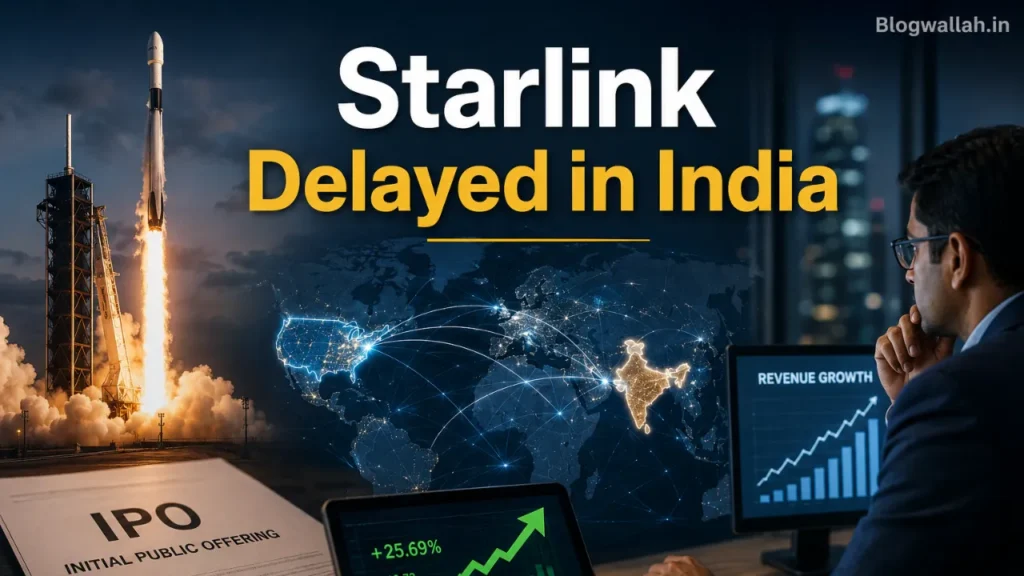
Just days before what could become the largest IPO in history, SpaceX has run into an unexpected obstacle. India has reportedly paused the final approvals needed for Starlink to begin commercial operations in the country, creating fresh uncertainty around one of the world’s biggest untapped internet markets. While Starlink remains a key growth engine for SpaceX, the delay highlights a challenge investors often overlook: expanding a global satellite network requires navigating complex national security and regulatory concerns.
India Reportedly Freezes Final Starlink Clearances
According to reports, Indian security agencies have withheld the final approvals Starlink needs to launch commercial satellite internet services in the country. The pause comes amid concerns over the use of Starlink terminals in conflict zones and questions about how governments can maintain oversight of foreign-operated satellite networks.
The timing is significant. The reported delay surfaced only days before SpaceX’s highly anticipated public listing, which is expected to value the company at around $1.75 trillion.
Why India Matters So Much to Starlink
India is one of the world’s largest internet markets and remains a major opportunity for satellite broadband providers. Millions of people still live in areas where traditional fiber and wireless networks are limited or unavailable.
For Starlink, gaining access to India would represent a major step toward expanding its global footprint. The company has already secured approval to move forward with compliance requirements in India, and many analysts previously viewed its eventual launch as a matter of when—not if.
A successful rollout could help Starlink reach millions of potential users in rural and underserved regions.
The Security Concerns Behind the Delay
Reports suggest Indian authorities became concerned after allegations that Starlink terminals were being used in conflict areas despite the service not being officially licensed in certain regions. Officials reportedly fear that satellite communications systems may be harder to regulate during geopolitical tensions than traditional telecom networks.
These concerns are not unique to India. Around the world, governments continue to debate how satellite internet providers should handle lawful interception, security compliance, and national sovereignty requirements.
Why Investors Are Paying Attention
For many investors, Starlink is one of the most valuable parts of SpaceX.
The satellite internet business has become a major revenue source for the company and is central to many of the growth projections surrounding SpaceX’s IPO. Any slowdown in major international markets could affect long-term expectations for subscriber growth and revenue expansion.
The reported delay serves as a reminder that Starlink’s expansion is not purely a technology story. It is also a regulatory story.
Starlink’s Global Expansion Isn’t Always Smooth
India is not the first country where Starlink has faced regulatory challenges.
The company has previously encountered licensing hurdles in multiple markets while governments worked through security, telecom, and compliance requirements. In India itself, Starlink’s first expansion attempt was halted in 2021 after authorities instructed the company to stop taking preorders before obtaining the necessary licenses.
Despite those setbacks, Starlink has continued expanding worldwide and now serves millions of customers across numerous countries and territories.
Also read;
Trump to Hold Rare Camp David Cabinet Meeting as Iran Talks Enter Critical Stage
Knicks vs Cavaliers Game 4 Live: New York Pushes Cleveland to the Brink
What Happens Next?
The current reports do not suggest India has permanently rejected Starlink. Instead, the approval process appears to be delayed while security concerns are evaluated. If those concerns are resolved, Starlink could still enter one of the world’s most important broadband markets.
For SpaceX, the bigger challenge is convincing investors that regulatory obstacles in individual countries will not significantly slow the company’s long-term growth strategy.
Why This Matters Beyond India
This story is bigger than a single country approval.
As satellite internet becomes more important globally, governments are increasingly asking difficult questions about who controls the infrastructure, where data flows, and how national security rules apply to networks operating from space.
The outcome of Starlink’s India approval process may become an important case study for future satellite internet regulation around the world.
Final Takeaway
India’s reported decision to pause final Starlink approvals arrives at a critical moment for SpaceX. With a record-breaking IPO approaching, the situation highlights both the enormous opportunity and the regulatory risks facing the world’s largest satellite internet provider. While the delay may prove temporary, it reminds investors that global expansion involves much more than launching satellites.
FAQ
Why did India delay Starlink’s launch?
Reports indicate Indian authorities are reviewing security concerns related to satellite internet operations and the use of Starlink terminals in conflict situations.
Is Starlink banned in India?
No. Reports suggest approvals have been delayed or frozen, not permanently rejected.
Why is India important to Starlink?
India is one of the world’s largest internet markets and represents a significant growth opportunity for satellite broadband services.
How does this affect SpaceX’s IPO?
Starlink is considered a major growth driver for SpaceX. Regulatory delays in large markets could become a factor investors watch closely.
When could Starlink launch in India?
There is currently no confirmed launch date. Future progress depends on regulatory and security approvals.
1 thought on “India Hits Pause on Starlink Just Days Before SpaceX’s Historic IPO”